
Market Trends
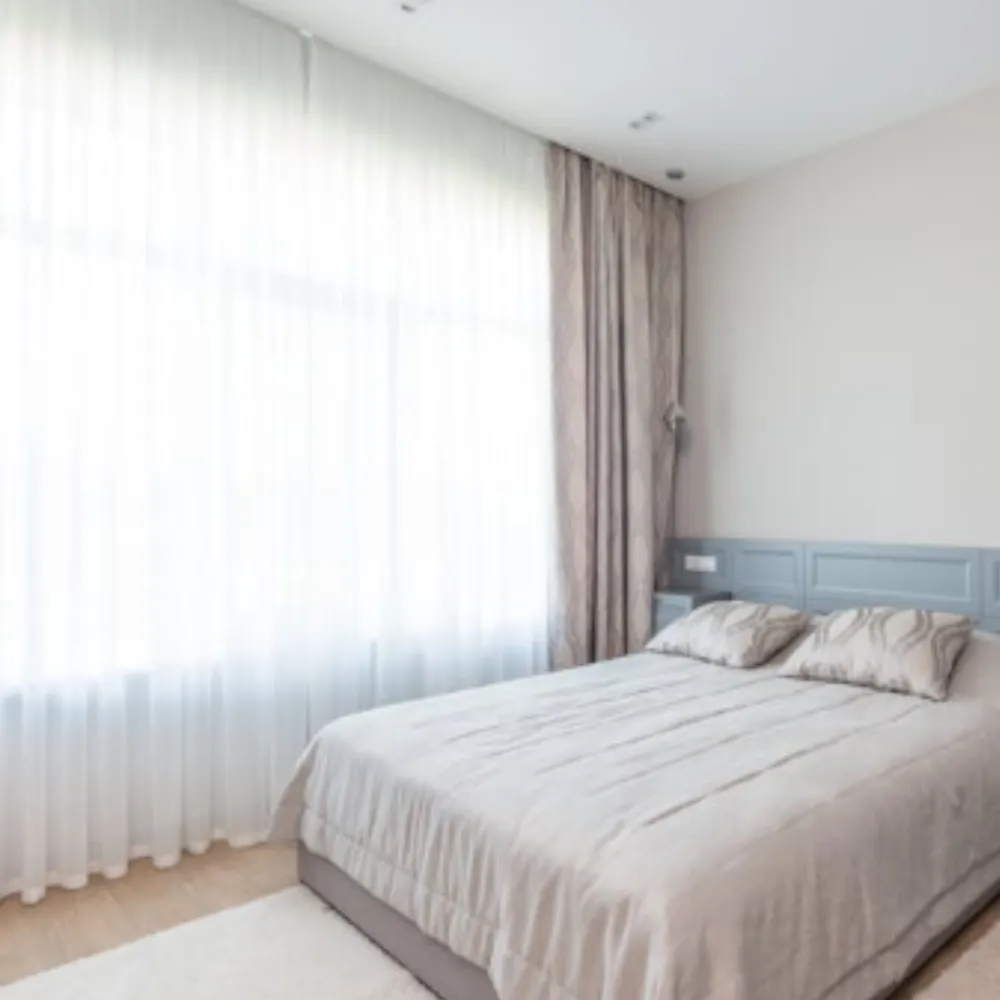
Motor Blinds
This article explores the key components behind electric motor blinds and auto
window blinds, and what suppliers and distributors need to know when sourcing
these systems.
Market Demand
The window covering industry has seen a significant shift in recent years, with
motorised blind systems moving from a premium niche product into mainstream
residential and commercial applications. Several factors are driving this growth.
The rapid expansion of the smart home market has created consumer demand for
window coverings that can be integrated with home automation platforms such as
Google Home, Amazon Alexa, and Apple HomeKit.
At the same time, commercial building standards in many markets are increasingly
requiring automated shading solutions as part of energy management strategies,
particularly in large glazed office buildings where manual operation of window
coverings is impractical.
For distributors and manufacturers, this shift represents a significant
opportunity to expand product lines and capture higher-margin business by
offering motorised blind systems and the blind components that support them.
Components
A motorised blind system is more complex than a manual one, and understanding
the individual components is essential for buyers who want to source, assemble,
or service these products effectively.
The core of any motorised blind is the electric motor, which replaces the manual
clutch or spring mechanism found in conventional systems.
The motor sits inside the tube and drives the winding and unwinding of the
fabric through a direct drive connection.
Surrounding the motor are several supporting blind components including the
power supply or battery pack, the control receiver, the limit switch mechanism
that tells the motor when to stop at the top and bottom positions, and the
external control interface.
This may be a wall switch, a remote control, or a smart home hub connection.
Each of these components must be correctly specified and compatible with one
another for the system to operate reliably.
Component List
Electric Motor
Drives tube rotation to raise and lower fabric
Power Supply / Battery
Provides power to the motor
Control Receiver
Receives signals from remote or smart hub
Limit Switch
Defines upper and lower stop positions
Wall Switch / Remote
User interface for manual control
Smart Hub Connector
Enables integration with home automation

Motor Types
Not all electric motor blinds use the same motor type, and the differences
between them have practical implications for installation, maintenance, and
end-user experience.
The two main categories are wired motor systems and battery-powered motor
systems.
Wired systems draw power from a mains electrical supply and are the preferred
choice for large commercial installations and new-build residential projects
where electrical wiring can be incorporated during construction.
They offer unlimited operating cycles and are well suited to high-frequency use
in office environments.
Battery-powered systems, on the other hand, require no electrical wiring and
can be retrofitted into existing spaces without modification.
This makes them popular for residential upgrades and renovation projects.
The trade-off is that batteries require periodic replacement or recharging, and
battery life varies significantly depending on the size and weight of the blind
and the frequency of use.
Power Options
• Mains-wired tubular motors — high power, suitable for wide and heavy blinds
• Rechargeable battery motors — wireless, easy to retrofit, recharged via USB
or solar panel
• Solar-powered motors — self-sufficient, ideal for south-facing windows with
consistent sunlight
• Low-voltage DC motors — used in smart home systems requiring hub integration
Auto Blinds
Auto window blinds refer to blind systems that operate automatically in response
to external triggers rather than direct user input.
These triggers can include time schedules programmed into a smart home
controller, light sensors that detect changes in ambient brightness and adjust
the blind position accordingly, temperature sensors that lower blinds
automatically when solar heat gain reaches a set threshold, or occupancy
sensors that open blinds when a room is in use and close them when it is empty.
In commercial buildings, auto window blinds are increasingly integrated into the
building management system, allowing centralised control of all window coverings
across an entire floor or building.
For buyers sourcing window shade automatic systems for commercial projects,
compatibility with the building's existing management infrastructure is a
critical specification requirement that must be confirmed before placing an
order.
Smart Homes
One of the most significant growth drivers for motorised blind systems is the
consumer appetite for smart home integration.
Homeowners who have already invested in smart lighting, smart thermostats, and
voice-controlled speakers are natural candidates for motorised window coverings
that can be added to the same ecosystem.
For distributors, this creates an opportunity to position motorised blind
components as part of a broader smart home offering rather than as standalone
window covering products.
The key to capitalising on this opportunity is ensuring that the motor systems
you source are compatible with the major smart home platforms.
Most leading motor manufacturers now offer motors with built-in radio frequency
receivers that are compatible with popular protocols.
Some also offer direct Wi-Fi or Bluetooth connectivity that eliminates the need
for a separate hub.
When evaluating suppliers, always confirm which smart home platforms the motor
is certified to work with and request compatibility documentation.
Sourcing Tips
Sourcing motorised blind systems requires a more rigorous evaluation process
than sourcing manual blind hardware because the consequences of component
failure are more significant and the technical requirements are more complex.
When assessing a supplier for electric motor blinds, several factors should be
carefully evaluated.
Motor noise level is a key consideration for residential applications. A motor
that is clearly audible during operation can become a source of complaints, so
always request decibel ratings and test samples before committing to supply.
Torque rating determines the maximum fabric weight and width the motor can
handle and must be matched carefully to the intended application.
Radio frequency interference can be an issue in densely occupied buildings where
multiple motorised systems operate in close proximity.
Motors with clean RF performance and good shielding are generally preferable.
The availability of spare parts and technical support is also more critical for
motorised systems because field servicing requires specialised knowledge.
Evaluation Checklist
• Motor noise level in decibels at operating speed
• Torque rating matched to fabric weight and blind width
• Radio frequency compatibility with target smart home platforms
• Power supply options including wired, battery, and solar
• Availability of technical documentation and installation support
• Supplier experience with export markets and regulatory compliance
Regulations
Motorised blind systems are subject to regulatory requirements that go beyond
those applying to manual window coverings.
Buyers sourcing these products for export markets need to be aware of the
relevant standards and certification requirements.
In Europe, motorised blind motors must comply with the Low Voltage Directive
and the Electromagnetic Compatibility Directive.
Products destined for the European market should carry CE marking to confirm
compliance.
In Australia, electrical components must meet the requirements of the relevant
Australian Standards and carry appropriate approval markings.
For battery-powered systems, battery safety standards are an additional
consideration, particularly for lithium-ion battery packs that are subject to
specific transport and storage regulations.
Working with a supplier that has experience exporting motorised blind
components to your target market can simplify the compliance process
significantly.
Case Study
To illustrate how these sourcing considerations play out in practice, consider
the example of a facilities management company responsible for a twelve-storey
office building in central Europe.
The building had manual roller blinds installed throughout, and the management
team wanted to upgrade to an auto window blind system as part of an energy
efficiency initiative.
The key requirements were compatibility with the existing building management
system, a mains-wired motor solution to eliminate battery maintenance, a low
noise rating for the open-plan office environment, and the ability to supply
consistent components across several hundred windows.
After evaluating several suppliers, the facilities team selected a Taiwan-based
manufacturer that could supply tubular motors with the correct torque range,
certified CE compliance documentation, and experience supporting similar
commercial projects in Europe.
The upgrade was completed in phases over six months, and the building
subsequently reported a measurable reduction in cooling energy consumption
during summer months.

FAQ
Auto Blinds
What is the difference between a motorised blind and an auto window blind?
A motorised blind is any blind operated by an electric motor rather than a
manual mechanism.
An auto window blind is a motorised blind that also operates automatically in
response to external triggers such as timers, light sensors, or building
management system signals.
All auto window blinds are motorised, but not all motorised blinds are
automatic.
Retrofit Use
Can existing manual roller blinds be converted to motorised blinds?
In many cases, yes, provided the existing tube diameter is compatible with
available motor sizes and the brackets can support the additional motor weight.
Battery-powered motors are particularly well suited to retrofit applications as
they require no electrical wiring.
However, the fabric weight and blind width must be checked against the motor's
torque rating before proceeding.
Battery Life
How long do batteries last in a battery-powered motorised blind?
Battery life varies depending on the motor type, blind size, fabric weight, and
frequency of use.
In typical residential settings, a quality rechargeable battery motor can
operate for several months between charges.
Solar-powered options are available for south-facing windows and can further
extend charging intervals.
Outdoor Use
Are window shade automatic systems suitable for outdoor use?
Some motorised systems are designed specifically for outdoor applications such
as awnings, external roller shutters, and pergola blinds.
These use motors with higher torque ratings and weatherproof housings.
Standard indoor motorised blind components are not suitable for outdoor
exposure and should not be used externally.
Smart Platforms
What smart home platforms are most commonly supported by motorised blind
motors?
The most widely supported platforms are Amazon Alexa, Google Home, and Apple
HomeKit.
Many motor manufacturers also support Zigbee and Z-Wave protocols, which are
commonly used in professional smart home installations.
When sourcing motors for smart home integration, always confirm platform
compatibility with the supplier and request certification documentation before
committing to a supply arrangement.
手機貸款看似快速方便,但由於貸款品質參差不齊,容易產生層層疊疊的詐騙陷阱,稍有不慎,就可能會掉入財務黑洞中!